BASIC ELEMENTS OF THE IMAGE

ELEMENTS IN ART
Characteristics | |
| Color in Art | Some of the main aspects of color include the color wheel, different color schemes, primary, secondary, and tertiary colors, complementary and analogous colors, hues, tones, tints, shades, saturation/intensity, value, and color temperature. |
| Value in Art | This refers to the light and dark aspects of color and it comes in low-key, high-key, or middle-key variations. |
| Line in Art | There are different types of lines – horizontal, vertical, diagonal, short, long, curved, or zig-zag, which all can be applied to form a fundamental structure of an artwork and provides different effects like movement, rhythm, or emphasis. |
| Shape in Art | Shape ranges from square, circular, triangular, or rectangular and is more two-dimensional, geometric, or organic. |
| Form in Art | These range from cubic, spherical, pyramidal, or conical, among many others, and it is three-dimensional, and can be geometric or organic. |
| Texture in Art | This refers to the “surface quality” of artworks, which can be real or implied. |
| Space in Art | This refers to the three-dimensionality or depth created in a composition, and it consists of positive and negative space, which can be utilized to create different effects. |
DOTS
Dot is the simplest element in art.
Dots are often used in multitudes or in combinations to form patterns, rhythm and movement.
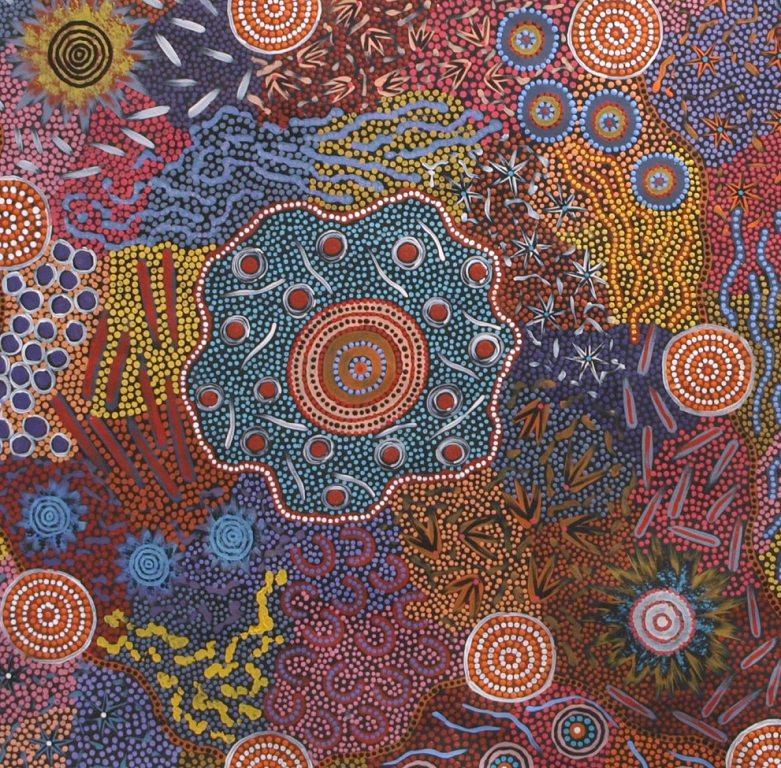
The focal point is the center of interest or activity in a work of art.
It may or may not be the actual center of a painting or drawing, but it is always the most important part.
YAYOI KUSAMA


YAYOI KUSAMA × LOUIS VUITTON

New York

París


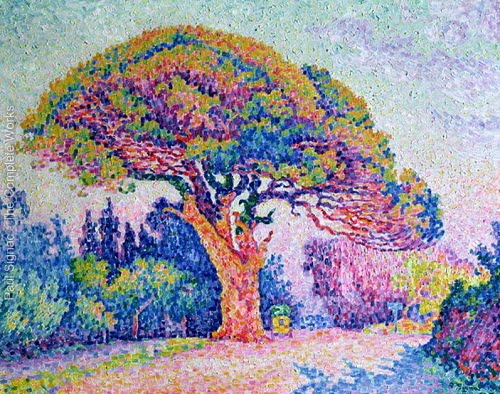
Pointillism is an original form of art created by George Seurat.
Pointillism is a bunch of tiny dots formed together to make a picture.


How to work with dots
Dispersion and concentration

The most dispersed the dots are, the more light there will be.


Size
We can create sense of depth by using dots of different sizes.


Mixing colors

DOTS IN ART


